Marketing Strategy · TOFU
Five Marketing Decisions Behind Apple's iPhone Duo, and How to Copy Them at Your Size
Devansh Trivedi — 10 September 2026 · 6 min read
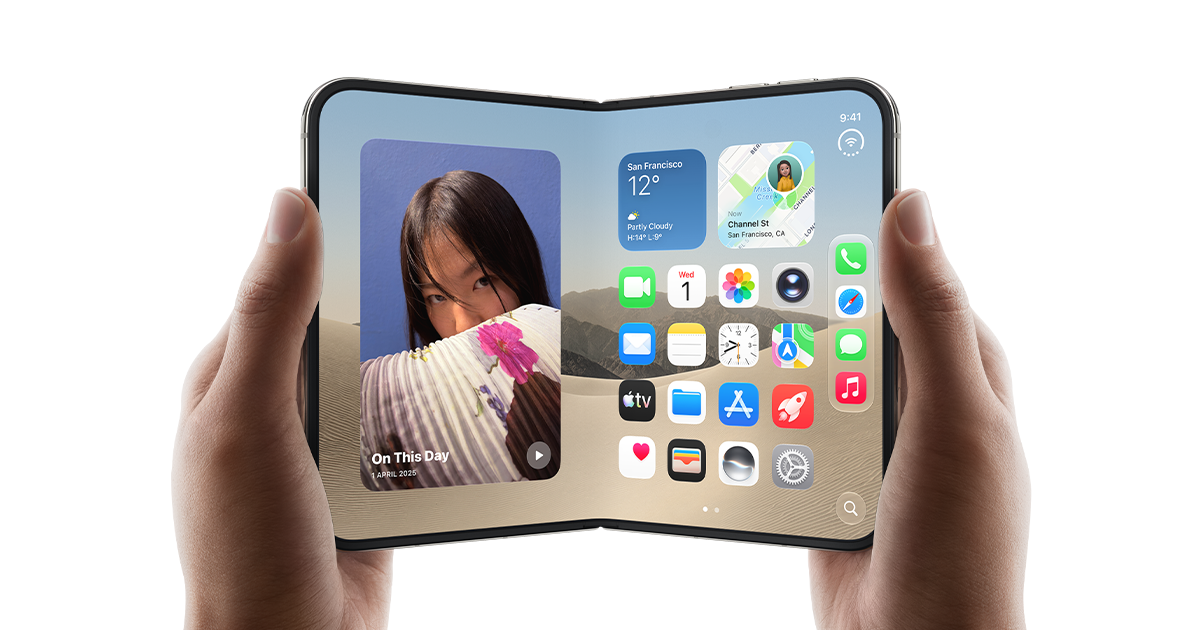
On September 9, John Ternus closed his first keynote as Apple's CEO with "one more thing," and unveiled the iPhone Duo. It is Apple's first foldable phone, it starts at $2,000 for 256GB, and it goes on sale in October, about seven years after Samsung shipped its first fold.
Most of the coverage went to the hinge, the 7.8-inch inner display, and the Apple Pencil support. The more useful story sits earlier than that. Every decision worth stealing was made before anyone walked on stage: what to call the thing, what to charge for it, and when to let people buy it.
Small businesses copy Apple's aesthetics constantly and Apple's decisions almost never. The white space and the clean product photography are the cheapest part of what Apple does, and the part least responsible for the result.
Each move below has a version that survives at your scale, without Apple's budget or its rumour industry.
1. Name it for what it does, not for the category it joins
Apple did not call it the iPhone Fold. It did not call it the iPhone Ultra, which is the name the company reportedly used internally for months. It called it the Duo, which points at the two screens rather than at the hinge.
That choice keeps Apple out of a vocabulary Samsung has owned since 2019. Ternus said on stage that other companies had built foldables that feel like two phones awkwardly stuck together. You cannot make that argument while using the same word your competitor made famous. Note also that the product is still an iPhone. Apple attached a brand-new form factor to the strongest product name it owns instead of starting a new one.
Your service page almost certainly carries the category label the whole market uses. Keep it there. That label is how people search, so it belongs in your page title, your headings, and your Google Business Profile category. Change the language where people decide instead: the name of your package, the first line of your proposal, the way you describe the work on a call. Apple can invent a word and fund the demand for it. You cannot. But you can control the word a client repeats to their partner over dinner that evening.
2. Make the delay part of the pitch
Apple is very late here. Samsung has been selling foldables since 2019 and has owned the category for most of that time. Apple's answer was to make the delay the argument. The company emphasised that it took its time after rivals moved early, and it pointed at the compromises in everything that shipped before it.
That framing works because the underlying complaint is real. People have genuinely disliked the crease, the bulk, and the durability of early folding phones. Apple did not invent an objection so it could answer one.
If you are smaller, slower, or later than the people you compete with, name it before the prospect does, and attach it to a complaint the prospect already has. "We take four clients a quarter" answers "my last agency stopped replying to my emails." A frame with no real complaint sitting behind it is just an excuse with better grammar.
3. Set the expectation before you set the price
Analysts spent months predicting $2,200 to $2,500 for this phone. Apple came in at $2,000. The most expensive iPhone ever made was reported as restrained, because the number arrived into an expectation that had already been set higher.
Apple protected that number deliberately. Reporting suggests the company blew through its own cost targets because of a memory shortage and absorbed part of the overage rather than break the $2,000 line.
You do not control a rumour cycle, but you do control the order in which numbers reach a buyer. Put a starting price or a range on your site so the first number a prospect sees comes from you. Lead a proposal with the full-scope option and place the option you expect them to choose underneath it. If your only number arrives at the end of a call, the client measures it against whatever they had imagined. What they imagined is usually below your cost.
4. Protect the entry price, earn on the ladder
The $2,000 configuration is the headline. Storage climbs to 2TB and the price climbs with it toward $3,000. Apple reportedly offset the cost it absorbed at the entry point by charging more at the top.
One number does the public work and a different number carries the margin. Pick the number you will defend in public, then build the tiers above it to earn back what the entry price gives up.
The entry package has to be real. A stripped decoy that nobody could actually use will get spotted, and it teaches clients to distrust your pricing page. Build the ladder out of the additions a certain kind of client always ends up asking for anyway: faster turnaround, extra revision rounds, original photography, a monthly reporting call. Those are the rungs, and they cost you the least to add.
5. Sequence the calendar instead of filling it
Apple announced the Duo on September 9 and will sell it in October, which is unusual for a marquee Apple product and gives the company room to manage a hard supply chain while demand builds.
The standard iPhone 18 is not coming this autumn at all. It has moved to spring 2027 alongside the 18e. That means anyone who wants a new iPhone during the holiday quarter has to buy from the premium end of the shelf, because the cheaper option is not on it.
And the Duo was announced last, after the watches, the AirPods, and the software, under Steve Jobs' old "one more thing".
Copy the habits, not the scale. Open a waitlist before you open the cart, so you learn what demand looks like before you commit capacity you would have to refund. Stop running your premium offer in the same campaign week as your cheapest one, because the cheap one will win and you will conclude, wrongly, that nobody wanted the expensive one. And put the offer you most want remembered at the end of the email or the webinar rather than the top, where it competes with your own housekeeping.
What not to copy
Apple had months of leaks warming up the audience for free. Gurman's report set the price expectation before Apple ever confirmed a number. Nobody leaks your launch. You have to build that anticipation yourself, and the only thing that builds it is a list you have been growing for months. Sequencing cannot manufacture it in launch week.
The staggered calendar is also a bet only Apple can make comfortably. Removing the affordable option works when the customer is locked into your ecosystem and will wait six months rather than switch. If a small business pulls its entry offer during peak season, most of those buyers do not wait. They buy from someone else.
And Vision Pro is worth keeping in view. It launched with all of this discipline, at a premium price, with enormous coverage, and it still has not scaled into a mainstream product. Naming, anchoring, and sequencing decide how well a good product travels. None of them decide whether people needed it.
Where to start
Take the next thing you are launching and apply two of these, not five. Name and price are the two that pay fastest. Write down what the client will call your offer when they describe it to someone else, then write down the first number they will see and where they will see it. If those two are right, the calendar work in section five gets much easier.
Keep reading
Want a sharper position for your next launch?
I help businesses turn complex offers into clear positioning, useful content, and a launch plan people remember.
Read next



Sources
- Engadget, everything Apple announced at the foldable iPhone launch
- MacRumors, iPhone Duo expected to start at $2,000
- NBC News, Apple foldable phone launch coverage
- Tom's Guide, iPhone Duo pricing and release reporting
- Engadget, iPhone Duo cost and pricing reporting
- Forbes, Apple's split iPhone launch schedule
- NBC New York, Apple keynote and “one more thing” coverage
- MacRumors, Vision Pro adoption reporting